Letter of Credit (L/C) Guide for Knitwear Buyers

Letter of Credit (L/C) Guide for Knitwear Buyers
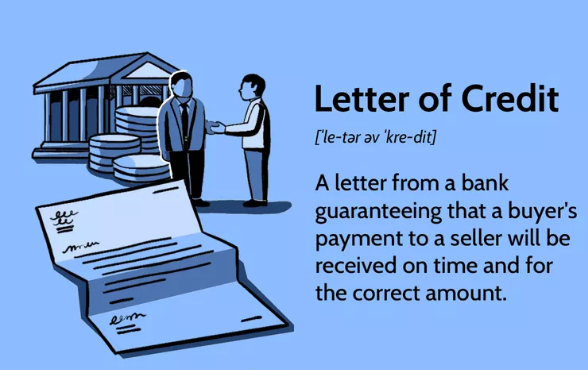
A Letter of Credit (L/C) is a bank-issued payment guarantee that protects both buyer and seller in international trade. For large orders of knitted scarves and beanies, L/C is often the standard payment method.
This guide explains how L/C works, costs, required documents, risks, and when to use L/C versus other payment methods. For a complete sourcing framework, see our Complete Sourcing Guide for Knitted Scarves & Beanies.
1. What Is a Letter of Credit?
A Letter of Credit is a bank's promise to pay the seller a specified amount, provided the seller presents compliant documents within a specified timeframe. The bank pays on behalf of the buyer, then the buyer reimburses the bank.
Key parties:
- Applicant (Buyer): Requests the L/C from their bank
- Issuing Bank: Buyer's bank that issues the L/C
- Beneficiary (Seller): Factory or supplier receiving payment
- Advising Bank: Seller's bank that confirms the L/C is valid
- Confirming Bank (optional): Adds a second guarantee
For buyers: L/C protects your deposit. The bank only pays when the seller proves they shipped compliant goods.
For sellers: L/C guarantees payment if they comply with all terms.
For payment terms, see our Complete Sourcing Guide for Knitted Scarves & Beanies.
2. How L/C Works (Step by Step)
Standard L/C Process
- Step 1: Buyer and seller agree on L/C terms in the purchase contract
- Step 2: Buyer applies for L/C at their bank, pays deposit (typically 10-30%)
- Step 3: Issuing bank sends L/C to seller's advising bank
- Step 4: Advising bank notifies seller that L/C is received
- Step 5: Seller produces goods according to L/C terms
- Step 6: Seller ships goods and prepares documents
- Step 7: Seller presents documents to their bank
- Step 8: Banks check documents for compliance
- Step 9: Issuing bank pays seller's bank
- Step 10: Buyer reimburses issuing bank and receives documents
- Step 11: Buyer uses documents to clear customs and take delivery
3. Types of Letters of Credit
Irrevocable L/C (Standard)
- Cannot be changed without all parties' consent
- Most secure for both buyer and seller
- Recommendation: Always use irrevocable L/C
Revocable L/C (Not Recommended)
- Can be changed or cancelled by buyer at any time
- Seller has no payment security
- Warning: Never accept revocable L/C as a seller
Confirmed L/C
- A second bank (confirming bank) adds its guarantee
- Protects seller if buyer's bank or country has risks
- Cost: Higher (additional confirmation fee)
- When to use: Buyer's country has political or economic risks
Unconfirmed L/C (Standard)
- Only issuing bank's guarantee
- Lower cost than confirmed L/C
- When to use: Buyer's bank and country are stable
Sight L/C (Standard)
- Payment made immediately after compliant documents presented
- Fastest payment for seller
- Recommendation: Standard for most knitwear orders
Usance L/C (Deferred Payment)
- Payment made after a specified period (e.g., 60 days after documents)
- Seller provides financing to buyer
- When to use: Established relationships, larger buyers
4. Required Documents for Knitwear L/C
Essential Documents
- Commercial invoice: Detailed description, quantity, unit price, total value
- Packing list: Carton count, dimensions, weight, piece count per carton
- Bill of lading: Proof of shipment, issued by shipping line
- Certificate of origin: Proves country of manufacture (China, Mongolia, etc.)
- Insurance certificate: If CIF term used
Knitwear-Specific Documents
- Fiber content test report: ISO 1833 or similar
- Pilling test report: ISO 12945-2
- Color fastness test report: ISO 105-C06, ISO 105-X12
- OEKO-TEX certificate: If specified in contract
- GOTS/GRS/RWS certificate: If applicable
For compliance guidance, see our Compliance Guide for Knitted Scarves & Beanies.
5. L/C Costs
Cost Breakdown
- Issuing fee (buyer): 0.1-0.5% of L/C value (minimum $100-300)
- Advising fee (seller): $50-150 per L/C
- Confirmation fee (if confirmed): 0.2-1% of L/C value
- Amendment fee: $50-100 per amendment
- Discrepancy fee: $50-200 per discrepancy
- Bank charges (seller's bank): $50-200
Total Cost Estimate (For $50,000 L/C)
- Buyer costs: $150-400 (issuing fee + possible amendments)
- Seller costs: $100-300 (advising + bank charges)
- Total L/C cost: $250-700 (0.5-1.4% of order value)
Compare to T/T (wire transfer): $30-60 per transaction. L/C is significantly more expensive but offers more security for both parties.
For cost analysis, see our Cost Breakdown Guide.
6. L/C vs T/T (Wire Transfer) Comparison
- L/C: Bank guarantees payment — security is high; cost is high ($250-700); speed is slow (2-4 weeks); documents are many; risk allocation is balanced.
- T/T (30% deposit, 70% balance): Buyer controls payment — security is medium; cost is low ($30-60); speed is fast (1-3 days); documents are minimal; risk allocation favors buyer.
When to use L/C: Large orders (>$50,000). New supplier relationship. Buyer's country has currency controls. Seller requires L/C.
When to use T/T: Small orders (<$20,000). Established supplier relationship. Trust established. Both parties want lower costs.
7. Common L/C Discrepancies for Knitwear
Document Discrepancies
- Late shipment: Shipment date after L/C expiry — reject document
- Late presentation: Documents presented after deadline — reject
- Invoice amount mismatch: Amount differs from L/C — reject
- Description mismatch: Product description differs — reject
- Quantity mismatch: Quantity outside tolerance — reject
Knitwear-Specific Discrepancies
- Fiber content test report missing: Required if L/C specifies — reject
- Test report values out of spec: Pilling grade below minimum — reject
- OEKO-TEX certificate expired: Certificate not valid — reject
- Incorrect HS code: Code on invoice doesn't match L/C — reject
- Country of origin mismatch: "Made in China" vs "Made in Mongolia" — reject
Cost of Discrepancies
- Discrepancy fee: $50-200 per set of documents
- Payment delay: 1-4 weeks while discrepancies are resolved
- Risk of non-payment: If discrepancies cannot be resolved
For quality standards, see our Ultimate Guide to Quality for Knitted Scarves & Beanies.
8. Buyer's L/C Checklist
Before Opening L/C
- Confirm L/C terms with seller (avoid misunderstandings)
- Ensure product description matches exactly what seller will ship
- Specify required documents (test reports, certificates, etc.)
- Set realistic shipment and expiry dates
- Include tolerance for quantity and amount (±5-10% standard)
After Opening L/C
- Send copy to seller for review immediately
- Amend quickly if seller finds issues
- Track shipment to ensure compliance with L/C dates
- Be available to approve discrepancies if they occur
At Document Presentation
- Review documents before bank processes
- Accept minor discrepancies if product is correct
- Prepare to pay even if there are discrepancies (if you accept)
9. Questions to Ask Your Bank
- What is the fee to issue an L/C?
- What is the processing time?
- Do you have experience with textile/apparel L/Cs?
- Can you provide a template L/C application?
- What is the discrepancy acceptance policy?
10. Questions to Ask Your Supplier
- Have you received L/C payments before?
- What is your advising bank?
- What discrepancies have caused problems in the past?
- Can you provide test reports from accredited labs?
- Are your certificates (OEKO-TEX, GOTS) current and valid?
For supplier evaluation, see our 5 Red Flags When Evaluating a Knitting Factory.
11. Related Resources
- The Complete Sourcing Guide for Knitted Scarves & Beanies
- Incoterms Guide for Knitwear Buyers
- Cost Breakdown Guide
- Compliance Guide for Knitted Scarves & Beanies
- The Ultimate Guide to Quality for Knitted Scarves & Beanies
- Sampling & Lead Time Guide
This guide is part of our Sourcing Tips series.