2026 Section 301 Scarf Tariffs: Current Rates, Hearing Updates, and Supply Chain Impact

2026 Section 301 Scarf Tariffs: Current Rates, Hearing Updates, and Supply Chain Impact
Introduction
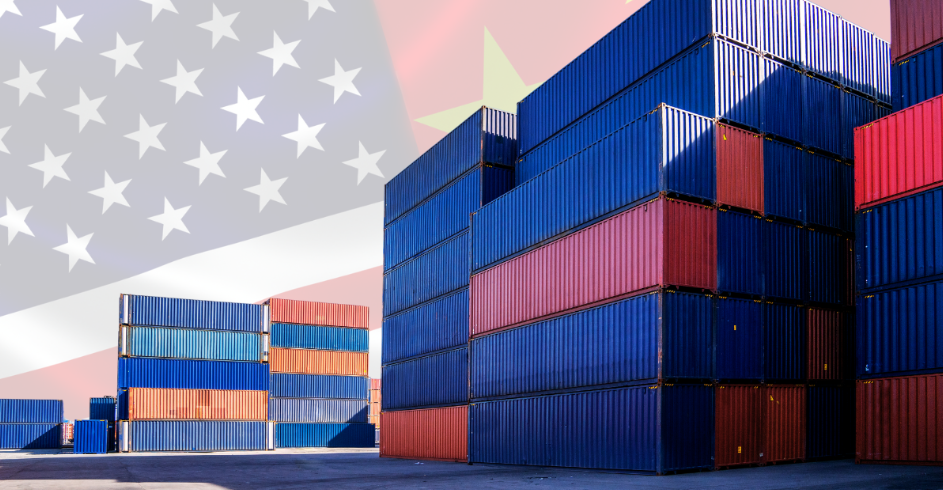
A scarf landed from China into the United States in May 2026 does not pay a single tariff rate. It pays three. A baseline most-favored-nation (MFN) rate, a Section 301 surcharge from the original Trump-era trade action, and an IEEPA "fentanyl-related" duty imposed in early 2025. A fourth layer may arrive before the year ends, as the USTR conducts a new Section 301 investigation with hearings scheduled for May 2026.
For importers sourcing scarves for the Q3 and Q4 2026 seasons, the tariff environment is not just expensive. It is unpredictable. A purchase order placed today at one cost structure may clear customs months later at a materially different one. This article covers the current rates, the policy timeline, the calculation mechanics, and what importers can do to reduce exposure while the rules remain in flux.
This is a companion to our broader Compliance Guide, which covers the non-tariff regulatory landscape for scarf imports, including labeling, chemical safety, and product passport requirements.
The Three-Layer Tariff Structure
A cashmere or wool scarf imported from China into the United States currently faces three cumulative duty layers:
| Layer | Authority | Rate | Status |
|---|---|---|---|
| Base MFN Rate | HTSUS Chapter 61/62 | Varies by fiber and knit/woven classification | Permanent (until changed by Congress) |
| Section 301 (Lists 1–4A) | USTR | 7.5%–25% depending on HTS code | Under investigation; may increase |
| IEEPA Fentanyl Duties | Executive Order | 20% on all Chinese-origin goods | Active; subject to executive action |
The total effective tariff on a Chinese-origin scarf can exceed 50% of the declared customs value before adding brokerage fees, merchandise processing fees, and harbor maintenance fees. A scarf with a $5.00 FOB value can carry a duty bill of $2.50–$3.00, effectively adding 50–60% to the landed cost before domestic logistics.
HS Code Classification for Scarves
The applicable HS code determines which Section 301 list applies and whether the MFN rate is at the lower or higher end of the range. Scarves fall into two primary chapters:
Knitted scarves: HS 6117.10. These typically carry MFN rates in the 5–12% range. Section 301 List 4A applies, currently at 7.5%. Combined with the 20% IEEPA duty, the effective rate ranges from approximately 32% to 40%.
Woven scarves: HS 6214.10 (silk), 6214.20 (wool/cashmere), 6214.30 (synthetic), 6214.40 (other). MFN rates vary significantly by subheading. Wool and cashmere woven scarves face lower base rates than synthetic equivalents. Section 301 classification depends on the specific subheading, with most falling under List 3 (25%) or List 4A (7.5%).
Misclassification is both a risk and, in some cases, an abuse. An importer classifying a knitted cashmere scarf under a woven subheading to capture a lower tariff rate is committing customs fraud. Customs and Border Protection (CBP) audits for textile misclassification have increased in 2025–2026, with penalties that include back duties plus interest for the prior five years of entries. Our Customs Documentation Guide covers compliant HS classification in detail.

The 2026 Section 301 Investigation
In early 2026, the USTR initiated a new Section 301 investigation into China's trade practices. The investigation is broader than previous rounds and includes textiles and apparel within its scope. Public hearings are scheduled for May 2026, with a determination expected by mid-to-late 2026.
For scarf importers, the critical questions are:
- Will the existing Section 301 rates increase? The current 7.5%–25% range on Lists 3 and 4A is under review. A reclassification of textile products to a higher-tier list would increase the surcharge overnight.
- Will new product categories be added? If scarf HTS codes currently exempt from Section 301 are included in the new investigation, the effective tariff on those codes will jump.
- Will the IEEPA fentanyl duties be absorbed into Section 301? The 20% IEEPA duty is an executive action, not a statutory tariff. It can be removed, modified, or replaced independently of the Section 301 process. Any change materially affects the total landed cost calculation.
Importers placing orders for Q3 and Q4 2026 delivery should model multiple tariff scenarios. A conservative model assumes the IEEPA duty remains in place and Section 301 rates increase by 5–10 percentage points on affected HTS codes. An optimistic model assumes the IEEPA duty is partially reduced and Section 301 rates remain static. A rational order quantity is one that remains viable under the conservative model.

China vs. Rest-of-World Sourcing Math
The tariff differential between Chinese-origin scarves and scarves from non-China sources is now large enough to shift sourcing decisions in many cases.
China origin: Base MFN + Section 301 (7.5–25%) + IEEPA (20%) = effective rate of 32–57% depending on HTS code.
Mongolia origin: Base MFN only. No Section 301. No IEEPA. Mongolia is not subject to any US punitive tariff regime. Effective rate is typically 0–12%, entirely from the base MFN rate.
Italy / EU origin: Base MFN only. No Section 301. No IEEPA. Effective rate comparable to Mongolia.
India, other origins: Base MFN only, unless the specific origin is subject to other trade actions. Effective rate is the base MFN rate.
The math suggests that a Mongolian cashmere scarf with a $20.00 FOB value incurs roughly $2.40 in duty, while a Chinese cashmere scarf of identical FOB value incurs $8.00–$11.40. The gap of $5.60–$9.00 per scarf, on an order of 5,000 units, represents $28,000–$45,000 in pure tariff differential. For many importers, this exceeds the per-unit cost difference between Chinese and Mongolian sourcing.
However, the math is not the whole story. Mongolian cashmere production is a fraction of China's. Supply availability, minimum order quantities, and quality consistency vary. Our Sourcing Guide covers how to evaluate suppliers across origins and build a diversified supply base.
Practical Steps for Importers in the Current Window
Audit your current HTS classifications. Confirm every scarf product is classified under the correct HTS code. Misclassification discovered during a CBP audit creates retroactive liability and, if determined to be intentional, penalties that can exceed the duty savings. Incorrect classification also distorts your tariff scenario modeling.
Model Q3–Q4 under three scenarios. Build conservative, baseline, and optimistic tariff projections for each product. Price your orders to survive the conservative scenario. If the baseline or optimistic scenario materializes, you have margin upside. If the conservative scenario materializes, you do not have a crisis.
Evaluate non-China sourcing for tariff-exposed products. For products where the tariff differential exceeds the per-unit sourcing cost differential, test non-China suppliers on a small batch. A diversified supply base is insurance against a single-origin tariff shock.
Consider duty drawback and bonded warehousing. If you re-export products or hold significant inventory, duty drawback recovery and bonded warehouse storage deferral can reduce the effective tariff burden on working capital. These are specialized operations that require customs broker support. Our Incoterms Guide covers how delivery terms interact with duty liability.
Monitor the May 2026 hearings. The USTR hearing outcomes will determine whether the Section 301 rate environment tightens further or stabilizes. The window between the hearing and the determination is the period in which importers should lock in supplier agreements, because once the determination is published, supplier pricing will adjust to the new tariff calculus within weeks.
Sources: USTR Section 301 Investigation Notices (2026); HTSUS Chapter 61 and 62; CBP Informed Compliance Publications; Executive Orders on IEEPA Tariffs (2025); trade press reporting on May 2026 hearing schedule. This article provides trade analysis, not legal advice. Consult a licensed customs broker or trade attorney for shipment-specific guidance.
Looking for verified cashmere scarf suppliers? Source scarves directly from Weave Essence.
Want to see more? Explore the online showroom.