Beanie Trends Guide: What's Selling in Knitted Headwear
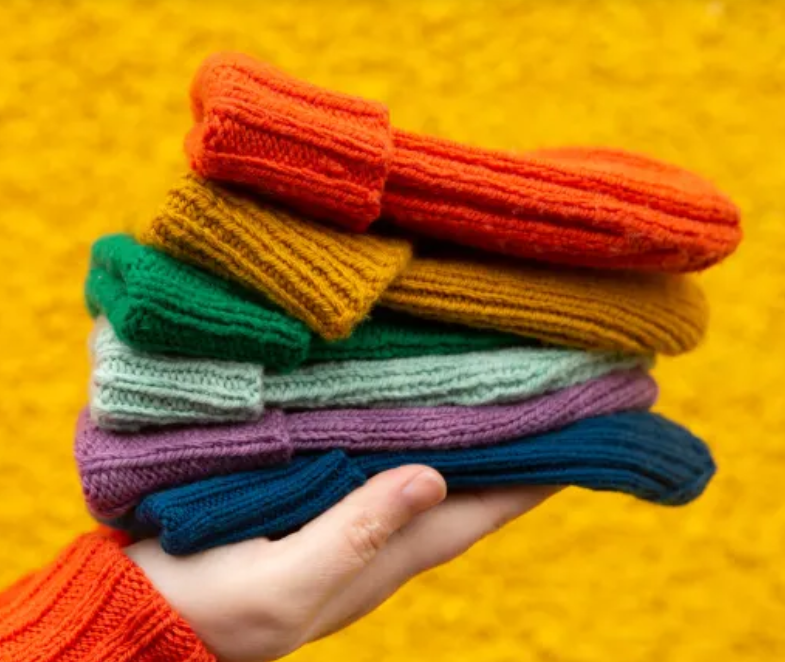
Beanies are the highest-volume knitted accessory after scarves, and they follow a different demand rhythm. While scarves are fashion purchases, beanies are replenishment items — consumers lose them, leave them in cars, buy one for each coat. That makes the beanie category more stable year-over-year, but also more sensitive to small shifts in silhouette and material preference.
Silhouette: The Three Shapes That Matter
| Silhouette |
Description |
Demand Trend |
Primary Market |
| Cuffed / Fold-Up |
Knit body with a folded brim. Double-layer warmth over the ears. |
Stable |
North America, UK, Scandinavia |
| Slouchy / Oversized |
Extra length creates relaxed drape at the crown. No fold. |
Growing |
Korea, Japan, fashion-forward EU |
| Fitted / Fisherman |
Close to the head, minimal excess fabric. |
Stable |
Scandinavia, outdoor/technical brands |
The slouchy beanie has been trending upward for three consecutive seasons, driven by Korean and Japanese streetwear. The production difference is simple: add 4–6 cm to the body length before the crown decrease. Same machine, same yarn, slightly more material, higher perceived value.
Yarn: What Beanies Are Being Made From
| Yarn |
Share of Orders |
Price /kg |
Typical Gauge |
| Acrylic |
~45% |
$3.50–$5.50 |
7–12 GG |
| Acrylic-wool blend |
~20% |
$8–$12 |
7–12 GG |
| Merino wool (100%) |
~15% |
$18–$28 |
12–14 GG |
| Recycled polyester |
~10% and rising |
$6–$10 |
7–12 GG |
| Cashmere |
~5% |
$95–$135 |
12–14 GG |
| Cotton (summer) |
~5% |
$6–$10 |
12–14 GG |
Recycled polyester is the fastest-growing segment. Outdoor brands and promotional buyers under ESG mandates need a sustainable option below merino's cost. At $6–$10/kg with GRS certification, it hits a price point recycled wool can't match.
Lining: The Hidden Differentiator
| Lining Type |
Cost Addition |
Best For |
| None (single-layer) |
$0 |
Fashion beanies, indoor use |
| Fleece lining (polyester) |
$0.60–$0.90 |
Outdoor, winter sports, cold climate |
| Fleece ear band only |
$0.25–$0.40 |
Compromise: warmth without bulk |
| Jersey knit lining |
$0.30–$0.50 |
Premium merino and cashmere |
Pompom vs No Pompom
| Pompom Type |
Cost |
Market Preference |
| Faux fur (acrylic) |
$0.40–$0.70 |
Dominant in fashion retail |
| Real fur |
$1.50–$4.00 |
Declining rapidly; banned in CA, under EU review |
| Yarn pompom (same as body) |
$0.10–$0.20 |
Growing in sustainable brands |
| Removable (snap/button) |
$0.15–$0.25 extra |
Niche; allows consumer choice |
Regulatory Note: Real fur pompoms are banned for retail in California (since 2023) and under consideration for EU-wide restriction. Faux fur or yarn pompoms are the safe bet.
Regional Preference Map
| Market |
Silhouette |
Yarn |
Pompom? |
Key Difference |
| Nordic |
Fitted |
Merino wool |
Rarely |
Minimalist; wool certifications matter |
| UK |
Cuffed |
Wool blend |
Often |
Traditional patterns; rib stitch |
| North America |
Cuffed |
Acrylic/blend |
Often |
Price-sensitive; fleece lining valued |
| Korea/Japan |
Slouchy |
Cashmere/merino |
Rarely |
Premium; oversized; muted colors |
| Germany/DACH |
Fitted/Cuffed |
Merino/recycled |
Rarely |
Sustainability certs required |
Beanie Sizing
| Size |
Flat Width |
Body Length |
Target Head Circ. |
| Kids (3–8) |
18–20 cm |
15–17 cm |
48–52 cm |
| Teen/Small Adult |
20–22 cm |
17–19 cm |
52–55 cm |
| Adult One Size |
22–24 cm |
18–21 cm |
55–58 cm |
| Large/XL |
24–26 cm |
20–22 cm |
58–62 cm |
One-size beanies rely on rib stretch. If the beanie is jersey without rib, it won't stretch enough. Always include a rib section at the brim — a 4 cm rib band provides enough recovery for a 3–4 cm circumference range.
What to Watch: The Recycled Shift
The beanie category is moving toward recycled materials faster than scarves. Beanies are smaller, simpler products, and "100% recycled polyester, GRS certified" is an easy story for consumers. Expect recycled polyester and recycled wool to take 25–30% of the category within three seasons.