Fiber Burn Test Guide: How to Identify Yarn by Burning

One of the first things you discover when you start working with fiber is that your stash has a way of growing on its own. Somehow, those cones and skeins multiply when you're not looking. If you're anything like me, you've probably got a few unlabeled or forgotten yarns sitting on your shelves, waiting to be identified.
Luckily, there's a simple and effective way to solve the mystery: the burn test. It might sound a little intimidating at first — after all, you're setting your yarn on fire — but once you learn how to do it safely, it becomes an invaluable tool. Plus, it's surprisingly satisfying to watch the results unfold.
Before you begin, take a moment to set up your workspace properly. You'll need a well-ventilated area with no drafts. I like to work near an open window with a sink nearby, just in case. Tie back long hair, remove any flammable items from your work area, and keep a plate or bowl of water close by. Safety comes first.
What you'll need to gather:
- A small sample of your mystery yarn
- Tweezers or hemostats (to hold the yarn safely)
- Scissors
- A candle or lighter
- A white ceramic plate or fire-safe surface
What to watch for during the test:
There are three key clues that will help you identify your fiber:
- Ignition and burn speed: Does the fiber catch fire quickly or slowly? Does it keep burning or stop on its own?
- Smell: This is often the most telling sign. Does it smell like hair, paper, or chemicals?
- Residue: What's left behind — a soft ash, a hard bead, or something in between?
Step-by-step instructions:
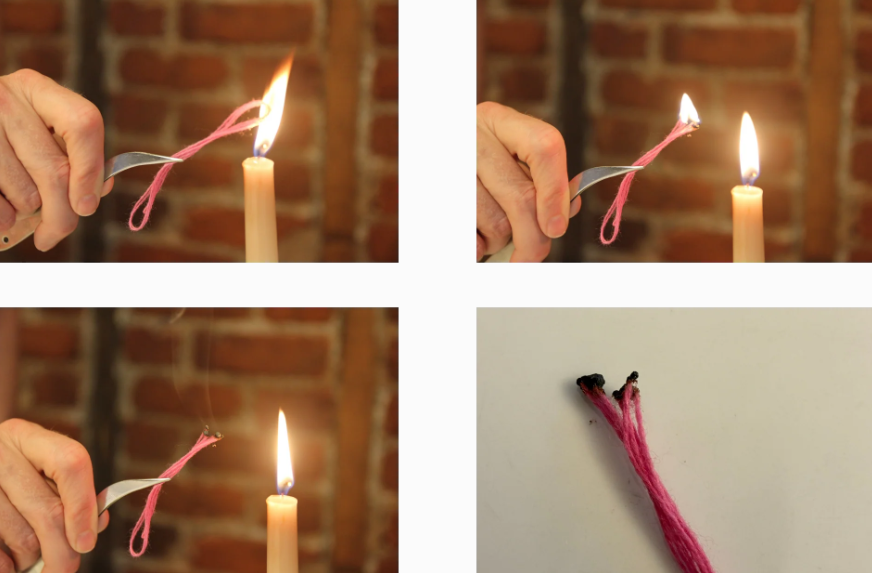
- Cut a small bundle of yarn, about 2–3 inches long.
- Using your tweezers, hold the yarn sample over the white plate.
- Bring the yarn to the flame and observe how it reacts. Does it melt first? Does it curl away?
- Pay attention to the smoke — its color and thickness can tell you a lot.
- Gently sniff the fumes (but don't inhale deeply). The odor is a major clue.
- Let the fiber burn completely or extinguish it by pressing it against the plate.
- Examine the residue. Can you crush it between your fingers? Or is it hard and plastic-like?
General behavior by fiber category:
- Protein fibers (wool, alpaca, silk): These tend to burn slowly and curl away from heat. They often self-extinguish when the flame is removed. The smell is unmistakably like burning hair or feathers. The ash forms a black, crunchy bead that crumbles easily.
- Cellulose fibers (cotton, linen, rayon): These burn quickly with a bright flame, similar to paper or wood. The smell is mild — think burnt paper or leaves. The ash is light gray or white and falls away easily.
- Synthetic fibers (polyester, acrylic, nylon): These melt before they burn. They often drip hot plastic and produce black, acrid smoke. The smell is chemical and unpleasant. The residue hardens into a dark, solid bead that won't crush.
Detailed fiber behavior:
Wool (such as Array)
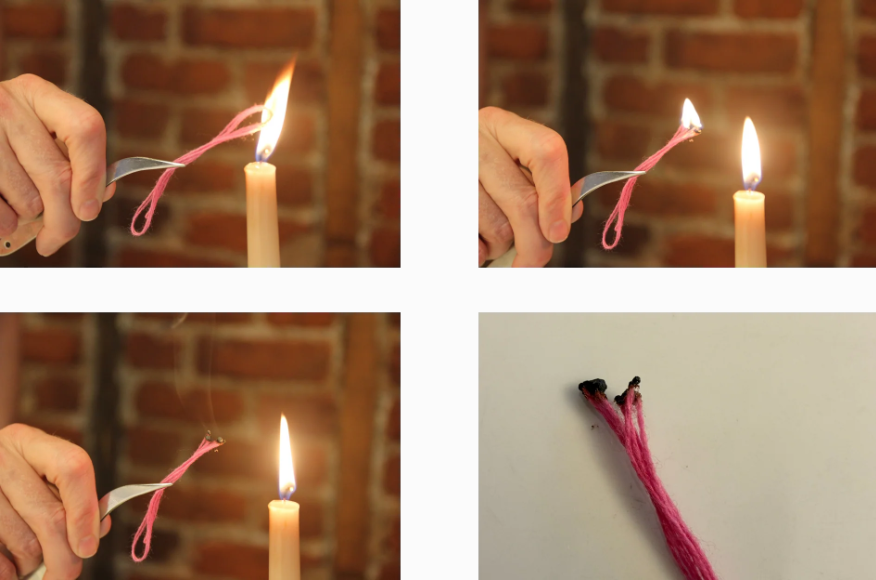
Wool is one of the easiest fibers to identify because of its strong, distinctive odor. When you hold a wool sample to a flame, it will hesitate before catching fire. Once lit, it burns slowly and steadily, and the flame often goes out on its own as soon as you pull the heat source away. The smoke is thin and dark. The smell is powerful — like burning hair or a campfire made of animal fur. After the flame dies, you'll be left with a small black clump. Press it between your fingers and it will crumble into a fine, sooty powder.
Alpaca (such as Ode)
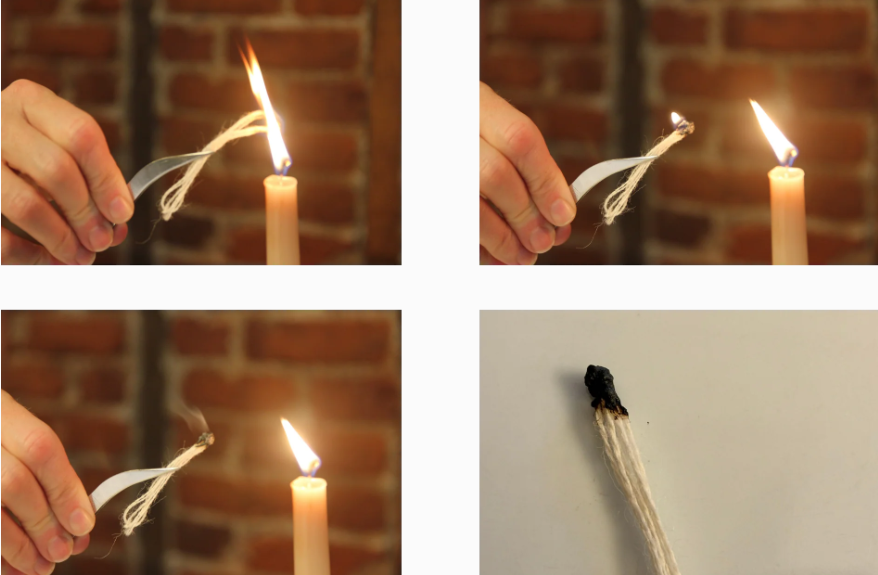
Alpaca fiber behaves very similarly to wool, with a few subtle differences. It burns slowly and curls away from the flame, and it will self-extinguish when removed from the heat source. The smell is unmistakably that of burnt hair, though it tends to be slightly less pungent than wool. Some people describe it as softer or milder on the nose. The ash forms a dark bead that crushes easily into a black powder. If you've ever smelled burnt wool and found it overwhelming, alpaca offers a gentler introduction to protein fiber identification.
Silk (such as Treenway)
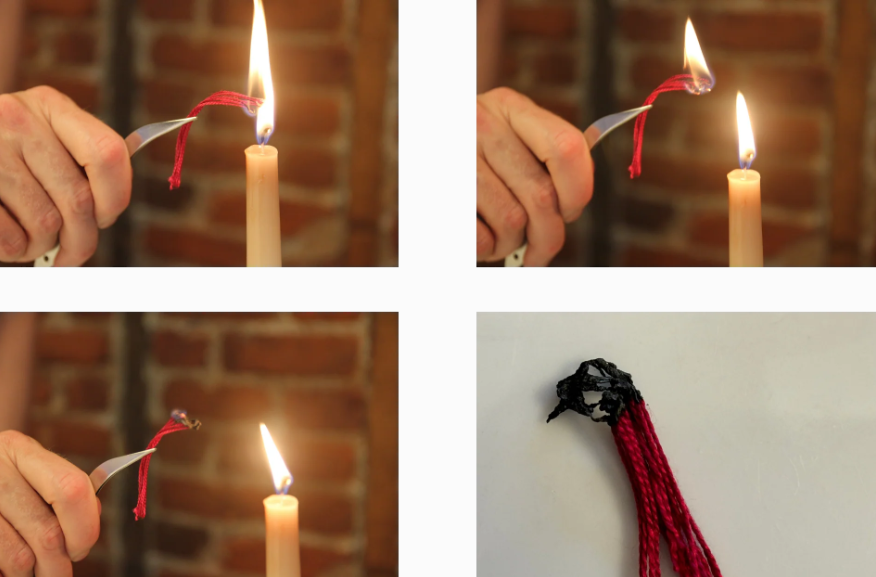
Silk is a protein fiber, but it behaves a little differently than wool or alpaca because of its smooth, dense structure. When you bring silk to a flame, it tends to scorch and curl away before actually catching fire. If it does ignite, the flame is low and slow, and it goes out quickly on its own. The smell is definitely that of burnt hair, but much milder — almost subtle compared to wool. The ash forms a small, brittle black bead that crushes into powder with very light pressure. If you're testing a very fine or lustrous yarn that smells like hair but not strongly, it's likely silk.
Raw Silk (such as Sero)
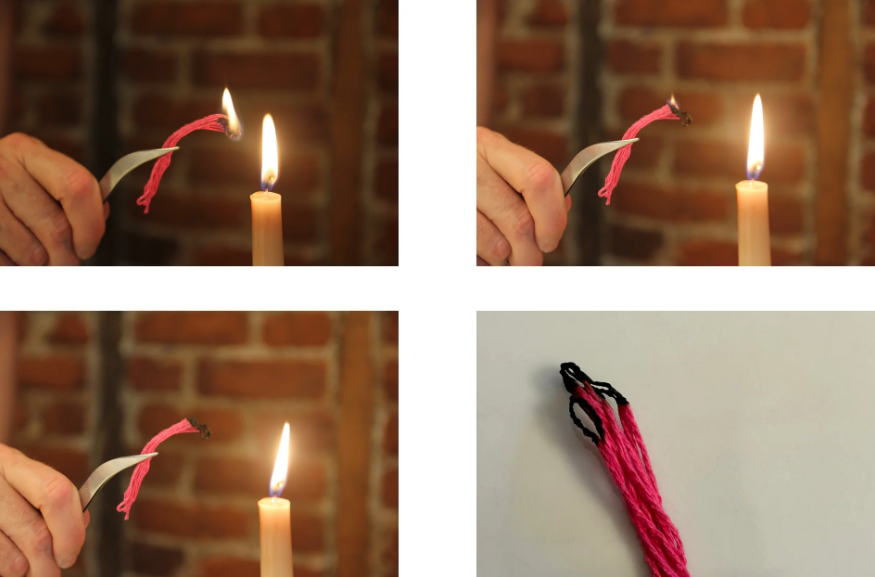
Raw silk contains sericin, the natural gum that coats silk fibers before processing. This affects how it burns. Compared to degummed silk, raw silk ignites more easily and burns with a brighter, quicker flame. The flame may even flicker with a bit more energy before the fiber self-extinguishes. The odor is still that of burnt hair and animal protein, but not as strong or sharp as wool. The ash crushes into a black powder. If you notice a slightly more vigorous burn than expected from silk, combined with the classic hair-like smell, you're probably looking at raw silk.
Cotton (such as Beam)
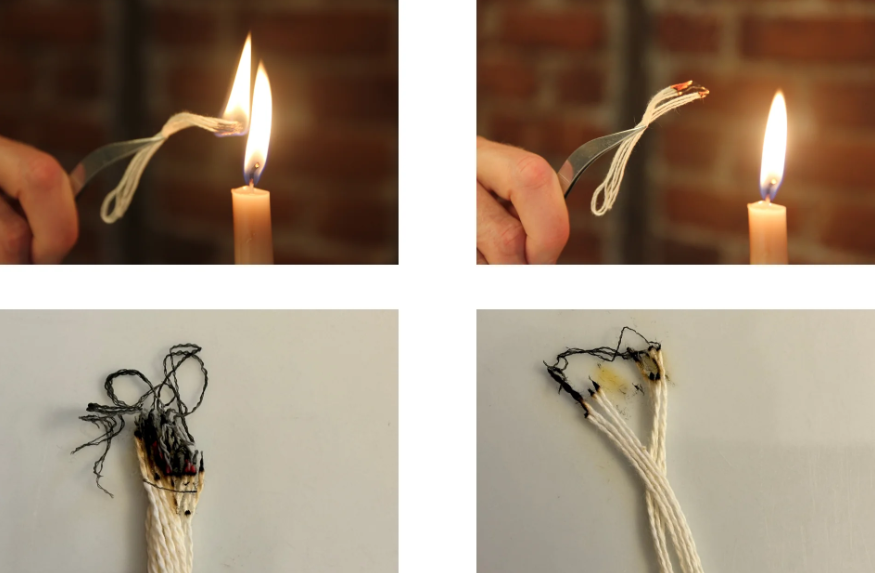
Cotton is a classic plant-based fiber, and its burn behavior reflects that. It catches fire almost immediately when exposed to flame and burns with a bright, clean flame — similar to lighting a piece of paper. It doesn't curl away or self-extinguish; it will keep burning until it's completely consumed unless you blow it out. The smoke is light and thin. The smell is distinctly that of burnt paper or dry leaves — nothing like the animal odor of protein fibers. What remains is a fine, dark gray ash that crumbles easily. If your yarn lights up like kindling and smells like a campfire, cotton is a strong candidate.
Linen
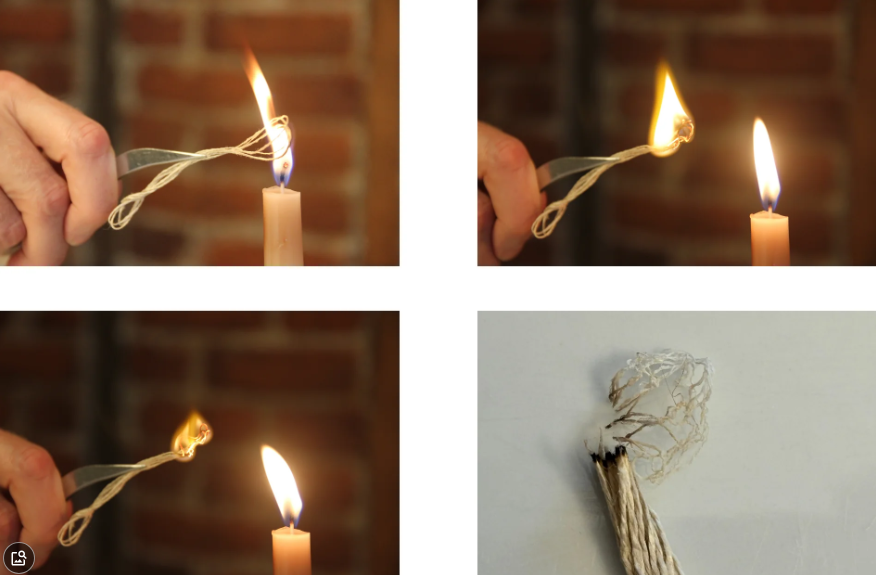
Linen comes from the flax plant, and while it behaves similarly to cotton, there are subtle differences. Linen takes a little longer to catch fire than cotton, and once lit, it burns more slowly. The flame is steady and bright. Like cotton, it smells like burnt paper or dry vegetation. The ash, however, is noticeably lighter — very fine and pale gray, almost white in some cases. If you have a yarn that burns like a plant fiber but feels cooler and slower than cotton, and leaves behind an especially light ash, you're likely holding linen.
Cotton/Linen Blend (such as Duet)
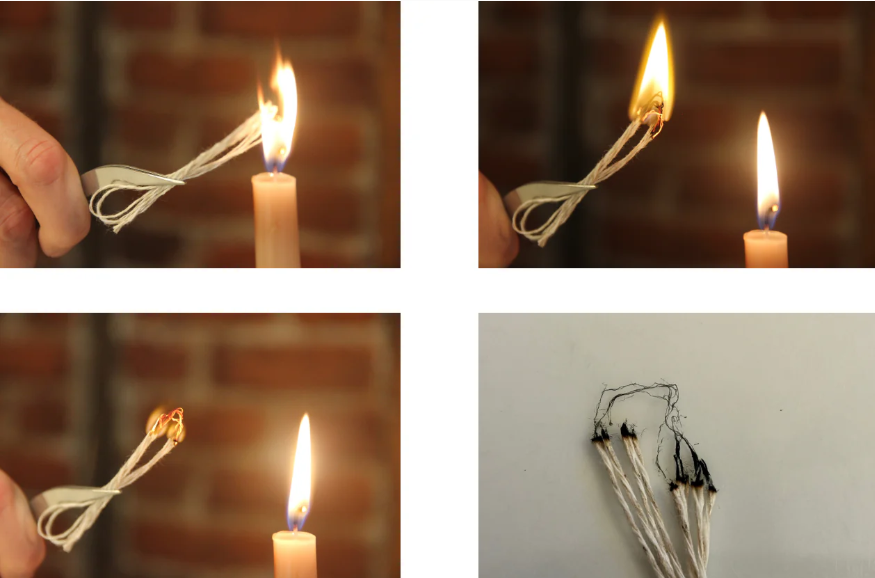
Blends can be trickier to identify because they show characteristics of both fibers. In a cotton-linen blend, the yarn will ignite easily and burn steadily. The odor is the mild burnt-paper smell typical of cellulose fibers. But the real clue is in the ash. Instead of being uniformly dark gray (cotton) or uniformly light gray (linen), you'll see a mix — some darker particles alongside some lighter ones. If you're testing a yarn that burns like plant fiber but leaves behind a two-toned ash, you've probably got a blend on your hands.
Rayon
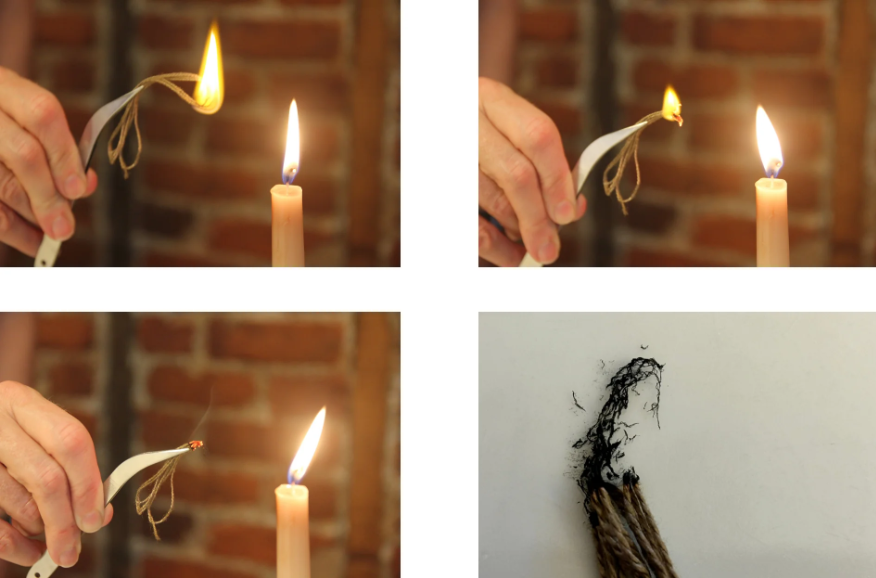
Rayon is a strange case. It's made from plant-based cellulose, so it burns like a natural fiber, but it's processed chemically, which affects its behavior. Rayon catches fire very quickly and burns with an intensely bright, fast flame — even faster than cotton. The smell is similar to burning paper, though often milder or less pronounced. The ash is typically black or very dark gray, and it crumbles easily. If your yarn ignites explosively and burns like flash paper, but leaves behind a dark ash and has only a faint papery smell, it's almost certainly rayon.
Polyester
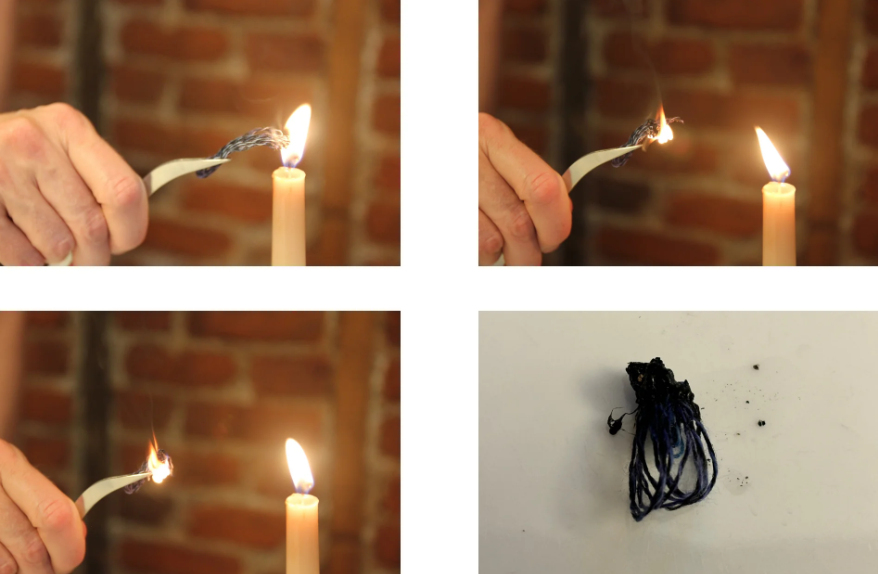
Polyester is a fully synthetic fiber, and it behaves nothing like natural fibers. Instead of catching fire immediately, polyester melts first. The melting edges curl away from the flame. When it does ignite, the flame burns very fast and bright, often accompanied by thick, black, acrid smoke. The smell is unmistakably chemical — burning plastic or rubber. This is often the easiest way to spot a synthetic. The residue is the most telling sign: instead of ash, you'll get a hard, dark bead that feels like melted plastic. You cannot crush it between your fingers. If you see melting, black smoke, and hard plastic beads, you've found polyester.
Once you've practiced the burn test on a few known fibers, you'll start to recognize patterns instantly. The way a fiber curls, the smell it gives off, the texture of its ash — these become like a signature. Over time, you may find that you no longer need to consult a chart every single time.
This is the kind of hands-on knowledge that builds real confidence. The next time you pull a mystery cone off your shelf, you won't have to guess. You'll know exactly how to find the answer.
Keep a printed copy of this guide in your studio, and you'll always be ready to identify whatever shows up in your stash.
Looking for verified cashmere scarf suppliers? Browse the vetted manufacturer at https://weaveessence.com
Want to see more? Explore the online showroom at https://labubuskin.com