Knitting Machine Types Guide for Knitwear Buyers

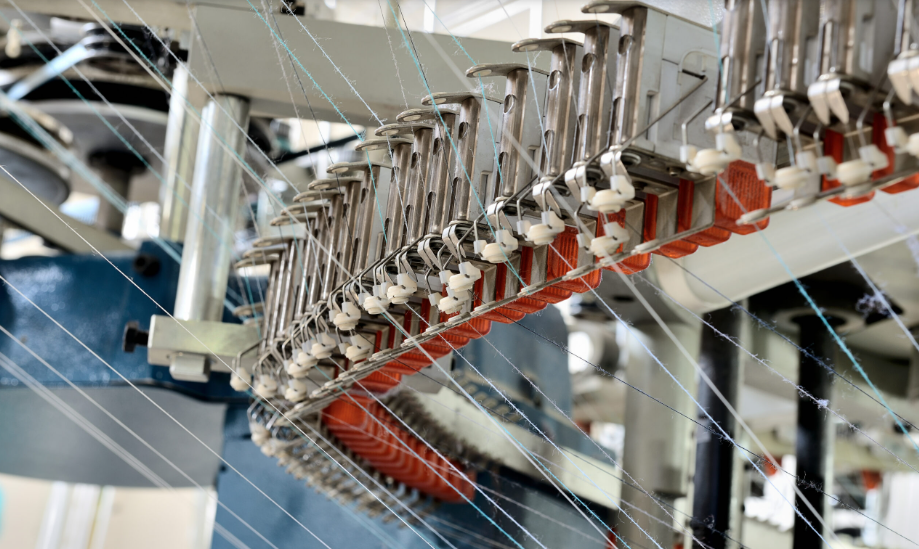
Knitting Machine Types Guide for Knitwear Buyers
A chunky scarf made on a fine-gauge machine? Impossible. A seamless beanie made on a flat bed machine? Also impossible. The type of machine your factory uses determines what products they can make, the quality level, and the cost.
This guide explains the main knitting machine types used for scarves and beanies, their capabilities, and which machine is best for your product.
1. The Three Main Machine Types
Flat Bed Knitting Machines
Description: The needles are arranged in a straight line (flat bed). The machine knits back and forth, creating flat panels of fabric.
Most common for: Scarves, beanies (cut and sewn), sweater panels, flat knit accessories.
Advantages:
- Versatile — can produce many stitch structures (rib, jersey, cables, jacquard)
- Can knit shaped pieces (fully fashioned) — less cutting waste
- Good for small to medium orders
- Available in wide range of gauges (3GG to 18GG)
Disadvantages:
- Slower than circular machines
- Requires cutting and sewing for beanies (unless shaped)
- Higher labor cost per piece
Circular Knitting Machines
Description: Needles are arranged in a circle (cylinder). The machine knits continuously in the round, producing a tube of fabric.
Most common for: T-shirt fabric, jersey, tubular scarves, beanie bodies (cut from tube).
Advantages:
- Very fast — highest production speed
- Produces seamless tubes — good for tubular scarves
- Lower cost per piece for large volumes
Disadvantages:
- Limited to basic stitch structures (mostly jersey, some rib)
- Cannot produce shaped pieces — all fabric is cut and sewn
- Higher minimum order quantity
- Edges curl — requires finishing
Whole Garment / Seamless Machines
Description: Advanced flat bed machines that knit 3D-shaped products directly — no cutting, minimal sewing.
Most common for: Seamless beanies, premium scarves, high-end knitwear.
Advantages:
- No side seams — more comfortable, cleaner look
- Minimal waste — environmentally friendly
- Premium quality perception
- Can produce complex shapes and structures
Disadvantages:
- Most expensive machine type
- Slower production
- Limited to finer gauges (typically 14GG-18GG)
- Not all factories have these machines
2. Machine Type Comparison
| Feature | Flat Bed | Circular | Whole Garment |
|---|---|---|---|
Let me provide that table clearly:
Machine Type Comparison
I'll present the comparison as text:
Machine Type Comparison
- Speed: Flat bed = Slow to medium, Circular = Very fast, Whole Garment = Slow
- Cost per piece: Flat bed = Medium, Circular = Low (high volume), Whole Garment = High
- MOQ: Flat bed = 300-1000 pieces, Circular = 2000-10000+ pieces, Whole Garment = 500-2000 pieces
- Stitch variety: Flat bed = High (rib, cable, jacquard), Circular = Low (mainly jersey), Whole Garment = Medium-High
- Seams needed: Flat bed = Usually requires sewing, Circular = Requires cutting and sewing, Whole Garment = Minimal to none
- Best for: Flat bed = Scarves, beanies, small-medium orders, Circular = Large volume basic scarves, Whole Garment = Premium seamless beanies
3. Which Machine for Which Product?
For Scarves:
- Flat bed machine: Best for most scarves. Can produce rib, jersey, cables, jacquard, and shaped ends (no loose threads). Wide gauge range.
- Circular machine: Good for basic tubular scarves (jersey only). Faster and cheaper for large volumes, but edges curl and need hemming.
- Whole garment machine: For premium seamless scarves. No side seams, but limited to finer gauges.
For Beanies:
- Flat bed machine: Most common. Knits beanie panels that are sewn together. Can produce ribbed brims and complex patterns.
- Circular machine: Knits tube that is cut and sewn into beanie shape. Faster but basic quality.
- Whole garment machine: Premium seamless beanies. No side seams, more comfortable, higher cost. Very popular for luxury beanies.
4. Gauge Range by Machine Type
Different machine types are available in different gauge ranges:
Flat Bed Machines:
- 3GG to 18GG — full range available
- Most common: 7GG, 12GG, 14GG
Circular Machines:
- 14GG to 28GG — generally finer gauges
- Most common: 18GG, 20GG, 22GG
- Coarse gauge circular machines exist but are less common
Whole Garment Machines:
- 14GG to 18GG — limited to fine/medium gauges
- Cannot produce chunky gauges (3GG-9GG)
5. Production Speed Comparison
For a standard 180cm × 30cm scarf:
- Flat bed (12GG): 8-15 minutes per scarf
- Circular (18GG): 2-4 minutes per scarf (plus cutting/sewing time)
- Whole Garment (16GG): 15-25 minutes per scarf
Circular machines are much faster, which is why they dominate basic t-shirt and jersey fabric production. However, for scarves and beanies, flat bed machines are more common because of their versatility.
6. Cost Implications
Machine Cost (Capital Investment):
- Flat bed machine: $15,000 - $40,000 per machine (depending on brand and features)
- Circular machine: $20,000 - $50,000 per machine
- Whole Garment machine: $50,000 - $100,000+ per machine
Production Cost per Piece (for standard scarf):
- Flat bed: $$ — moderate
- Circular: $ — low (high volume only)
- Whole Garment: $$$ — high
7. How to Identify Which Machine Your Factory Uses
Ask these questions:
- "What brand and model of knitting machines do you have?" (e.g., Stoll, Shima Seiki, Mayer & Cie)
- "Do you have flat bed or circular machines?"
- "What gauges do your machines support?"
- "Do you have whole garment (seamless) machines?"
- "Can you produce shaped pieces or only cut and sew?"
8. Machine Brands
Reputable machine brands indicate factory capability:
Flat Bed (most common for scarves/beanies):
- Stoll (Germany) — Premium, widely used
- Shima Seiki (Japan) — Premium, whole garment specialists
- Steiger (Switzerland) — High quality
- Flying Tiger (China) — Lower cost, common in China
- Long Xing (China) — Entry level
Circular:
- Mayer & Cie (Germany) — Premium
- Fukuhara (Japan) — High quality
- Pailung (Taiwan) — Good quality
- Jingwei (China) — Lower cost
9. Factory Capability Questions
- ✓ "How many flat bed machines do you have? What gauges?"
- ✓ "Do you have whole garment (seamless) capability?"
- ✓ "Can you produce jacquard patterns on your machines?"
- ✓ "Do you knit shaped pieces or do you cut and sew?"
- ✓ "What is your weekly production capacity for scarves / beanies?"
10. Quick Reference: Machine Type by Product
- Basic jersey scarf (large volume): Circular machine
- Rib scarf (standard quality): Flat bed machine
- Jacquard / patterned scarf: Flat bed machine
- Chunky / blanket scarf: Flat bed machine (coarse gauge)
- Seamless beanie (premium): Whole garment machine
- Standard beanie (cut and sewn): Flat bed machine
- Basic beanie (high volume, low cost): Circular machine (tube cut and sewn)
For most scarf and beanie orders, flat bed machines are the standard. They offer the best balance of versatility, quality, and cost. Circular machines are for high-volume basic products. Whole garment machines are for premium seamless products.
Related Guide from Weave Essence
📘 Knitting Basics: A Technical Guide for Buyers (L1)
Need help understanding which machine type is right for your product? Contact our team →